

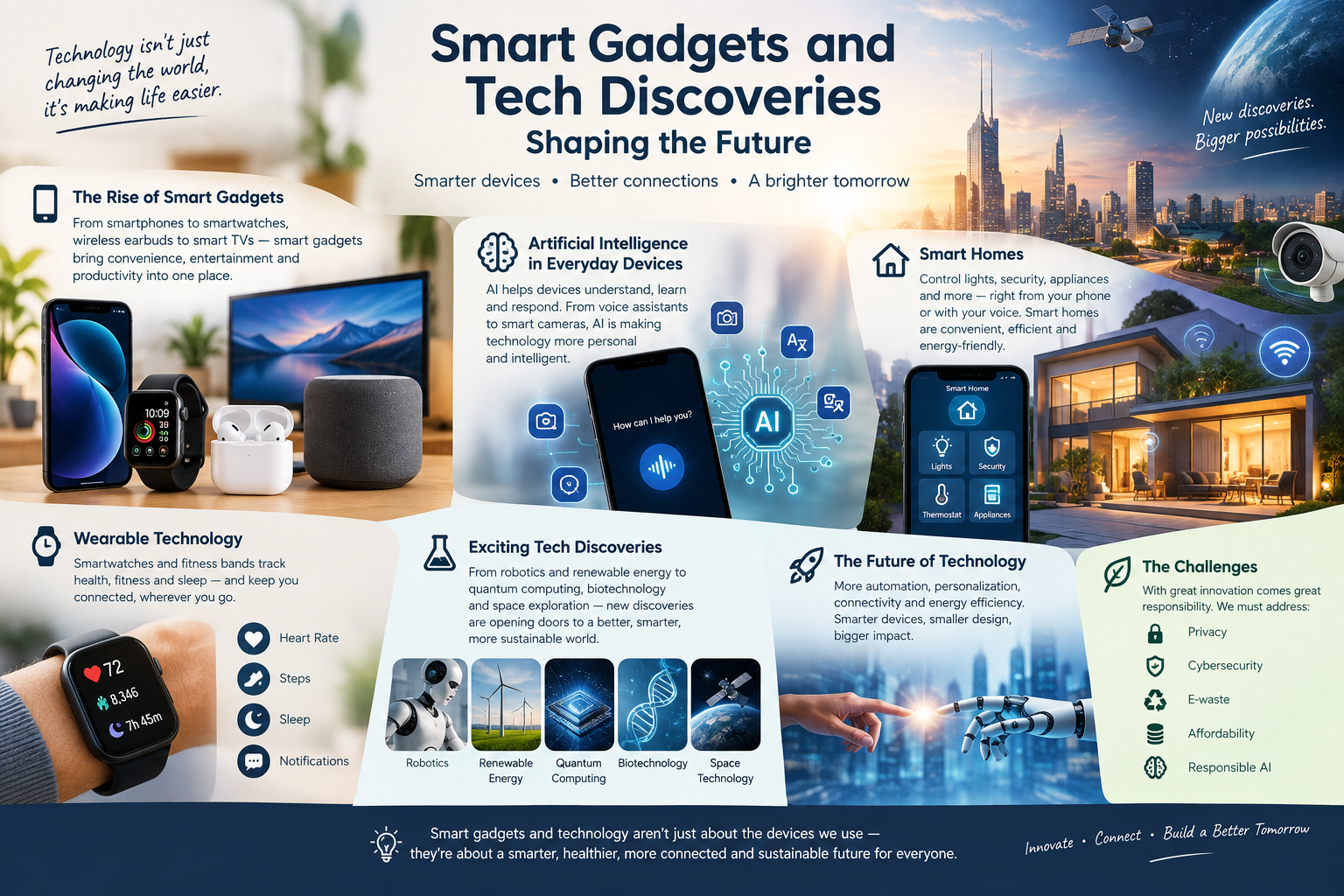
Technology has become an essential part of modern life. From smartphones and smartwatches to artificial intelligence and connected home devices, new innovations are changing the way people communicate, work, study, travel, and entertain themselves. Smart gadgets are no longer limited to luxury products—they are becoming useful tools for everyday life.
The Rise of Smart Gadgets
Smart gadgets are electronic devices that use advanced technology, sensors, software, or internet connectivity to perform tasks more intelligently. Smartphones are perhaps the most common example. They combine communication, photography, entertainment, navigation, banking, shopping, and productivity into one device.
Other popular smart gadgets include smartwatches, wireless earbuds, smart speakers, fitness trackers, smart TVs, and connected home appliances. Many of these devices can communicate with each other, creating a connected digital environment.
Artificial Intelligence in Everyday Devices
One of the biggest technological developments today is artificial intelligence (AI). AI allows devices to understand information, recognize patterns, respond to commands, and provide personalized assistance.
AI is increasingly being integrated into smartphones, cameras, computers, cars, and home devices. For example, modern cameras can automatically recognize people and scenes, while AI assistants can help users organize information, answer questions, and complete everyday tasks.
Smart Homes
Smart-home technology is making homes more convenient and efficient. Smart lights, security cameras, doorbells, thermostats, and appliances can be controlled through smartphones or voice commands.
These devices can also automate routine activities. Lights can switch on automatically, security cameras can send alerts when unusual activity is detected, and smart appliances can be monitored remotely. Such technologies can improve convenience while potentially helping users manage energy consumption.
Wearable Technology
Wearable gadgets have become increasingly popular because they combine technology with health, fitness, and communication. Smartwatches and fitness bands can track activities such as walking, running, exercise, and sleep.
Some advanced wearables can also monitor various body-related measurements and provide notifications. As wearable technology continues to develop, these devices are becoming smaller, more powerful, and more integrated into daily routines.
Exciting Tech Discoveries
Beyond consumer gadgets, scientific and technological discoveries are opening new possibilities. Advances in robotics, renewable energy, quantum computing, biotechnology, space technology, and artificial intelligence are influencing the future of society.
Robots are being developed for industries ranging from manufacturing to healthcare. Renewable-energy technologies are improving the way electricity is generated and stored. Meanwhile, researchers are exploring quantum computers that could eventually solve certain types of problems that are difficult for conventional computers.
The Future of Technology
The future of smart technology is likely to focus on greater automation, personalization, connectivity, and energy efficiency. Devices may become more capable while becoming smaller and easier to use.
However, technological progress also brings challenges. Privacy, cybersecurity, electronic waste, affordability, and responsible use of AI are important issues that need attention. Innovation is most valuable when it improves people’s lives while protecting their safety and rights.
Conclusion
Smart gadgets and technological discoveries are transforming the world at an extraordinary pace. What once seemed like science fiction—voice-controlled homes, intelligent assistants, wearable computers, and advanced robots—is becoming part of everyday life.
As technology continues to evolve, the most important goal should not simply be creating smarter devices, but using innovation responsibly to make life more convenient, sustainable, connected, and productive.